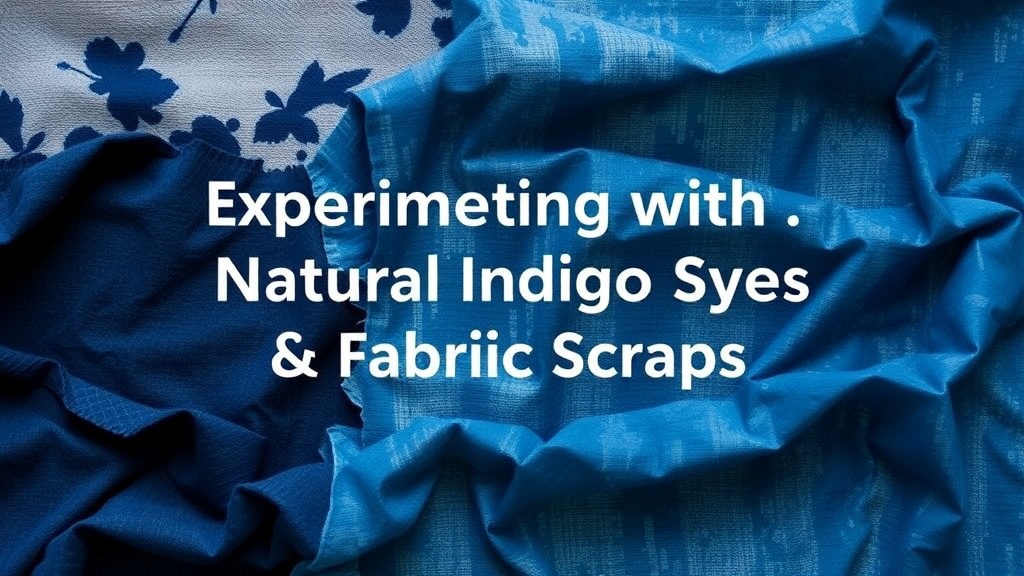
Experimenting with Natural Indigo Dyes and Fabric Scraps

In this post, you'll learn how to manage a natural indigo dye vat, the specific steps for dyeing fabric scraps, and how to achieve deep blue hues without wasting expensive materials. We'll look at the chemistry of indigo, the necessary tools for a small-scale setup, and how to repurpose textile waste into art.
Indigo dyeing is a process of oxidation rather than simple pigment soaking. You aren't just "coloring" the fabric; you are actually changing the way the fibers interact with light through a chemical reaction. It's a bit of a science experiment in your kitchen or studio, and if you don't respect the pH levels, you'll end up with a muddy mess.
What Do I Need to Start Indigo Dyeing?
You need a pH-balanced indigo vat, a source of alkalinity, a reducing agent, and a variety of natural fibers. For a beginner-friendly setup, I recommend using a small ceramic or glass crock rather than a massive plastic tub. This keeps the volume manageable and prevents the dye from becoming too expensive to maintain.
Here is a basic checklist of the supplies you'll need to get started:
- Indigo Powder: I usually stick with high-quality Indigofera tinctoria powder.
- Reducing Agent: Fructose or henna can work, but calcium hydroxide (slaked lime) is the standard for a traditional vat.
- The Vessel: A 5-gallon bucket or a large glass jar works perfectly for small batches.
- Fabric Scraps: Stick to 100% natural fibers like cotton, linen, or silk.
- Thermometer: You need to monitor the temperature to ensure the vat stays stable.
Don't bother trying this with polyester or nylon. Synthetic fibers simply won't take the dye, and you'll just be wasting your time (and your good lime). If you want to see the chemical structure of how these dyes bond to cellulose, you can check the technical details on Wikipedia.
One thing to remember: indigo is messy. It stains everything. If you have a white countertop, maybe cover it with a drop cloth before you start. I've ruined more expensive workspaces than I'd like to admit because I was too confident in my "clean" setup.
Choosing Your Fabric Scraps
The beauty of this project is the ability to use scraps. Instead of buying expensive bolts of fabric, look for old 100% cotton t-shirts, linen napkins, or even scraps from a sewing project. The goal is to see how different weights of fabric react to the dye. A heavy canvas scrap will behave very differently than a thin silk scarf.
When you're selecting your scraps, check the labels. If a shirt is a 50/50 cotton-polyester blend, the indigo will only hit the cotton fibers, leaving a heathered, uneven look. While some people find that "rustic" look appealing, for a technical experiment, it's better to stick to pure fibers. It's a bit like keeping your paint smooth—consistency in your base material determines the quality of your final result.
How Much Does Indigo Dye Cost?
A standard starter kit of indigo powder and basic chemicals usually costs between $40 and $70 depending on the volume. While the upfront cost feels a bit steep, the cost per use is incredibly low because you can reuse your vat multiple times. A well-maintained vat can last for months of dyeing sessions.
| Material | Estimated Cost (USD) | Primary Use |
|---|---|---|
| Indigo Powder (100g) | $25 - $35 | The primary pigment source |
| Calcium Hydroxide | $10 - $15 | Raising the pH level |
| Fructose/Reducing Agent | $15 - $20 | Removing oxygen from the vat |
| Glass/Ceramic Vessel | $0 - $20 | Holding the dye liquid |
It's worth noting that the "cost" isn't just money; it's time. You can't rush a vat. You have to wait for it to "reduce"—which is the process of removing oxygen so the dye becomes soluble. If the liquid isn't a deep, translucent yellow-green, it's not ready for dipping.
The Process: Step-by-Step
First, you'll prepare your "reduction" liquid. This involves mixing your indigo powder with a bit of warm water to make a paste, then adding it to your alkaline solution. Once the vat is prepared, you'll see a layer of "indigo scum" or a "flower" form on the surface. This is a good sign. It means the oxygen is being pushed out and the dye is ready.
- Dip: Submerge your fabric scrap into the vat. Don't leave it in too long—usually 2 to 5 minutes is enough for a single dip.
- Oxidize: Pull the fabric out and shake it in the air. It will look yellow or green at first. This is the most exciting part! As it hits the oxygen in the air, it will turn blue right before your eyes.
- Repeat: For a deeper blue, you don't leave it in longer; you dip it, oxidize it, and dip it again. This layering is what creates the depth of color.
- Rinse: Once you reach the desired shade, rinse the fabric in a bucket of water and then a mild vinegar solution to neutralize the pH.
If you find the colors aren't sticking, your pH might be too low. Most indigo vats need to stay around a pH of 10 or 11. If it drops, the indigo won't stay in a reduced state, and your fabric will come out looking patchy. It's a delicate balance.
How Do I Get Deep Blue Colors?
The secret to deep, dark blue is multiple short dips rather than one long soak. Each time you dip the fabric and let it oxidize, you are layering a new thin film of indigo onto the fibers. This builds a much more durable and vibrant color than a single deep immersion.
I've found that if you try to "over-dip" without letting the fabric dry or oxidize between steps, the dye can become too thick and actually rub off the fabric (this is called "crocking"). It's a common frustration for beginners. To avoid this, make sure the fabric is relatively dry or at least well-drained before the next dip. The more patience you have, the better the result.
If you're interested in the more technical side of natural dyes, the Environmental Protection Agency provides guidelines on the safety of various chemicals, which is a good thing to keep in mind when working with substances like calcium hydroxide in a home studio. While indigo is natural, the alkaline solutions used to manage it require respect and proper ventilation.
One of my favorite ways to use these scraps is to create "color-blocked" textiles. You can take a single scrap of linen and dye one half a light sky blue and the other a deep navy. It makes for great texture when you're working on larger-scale projects like fabric-based collages or mixed media art.
The texture of the fabric plays a huge role here. A rougher, more irregular piece of hemp will hold the dye in a more "organic" way than a smooth cotton poplin. This can be a great way to experiment with how different surfaces hold pigment, much like how you might experiment with different textures in a mixed media piece. The goal isn't perfection; it's the character of the material.
A quick tip for the workspace: keep a dedicated bucket of clean water nearby. You'll want to rinse your hands frequently, as indigo pigment is incredibly stubborn once it gets under your fingernails. If you're feeling particularly adventurous, you can try using a pH meter to be more precise, but a simple litmus test or even just observing the color change is often enough for a home setup.
Don't be afraid of the mistakes. If a scrap turns out a weird color or the dye doesn't take, don't toss it. Use it as a study in what *not* to do. That's where the real learning happens in any craft.