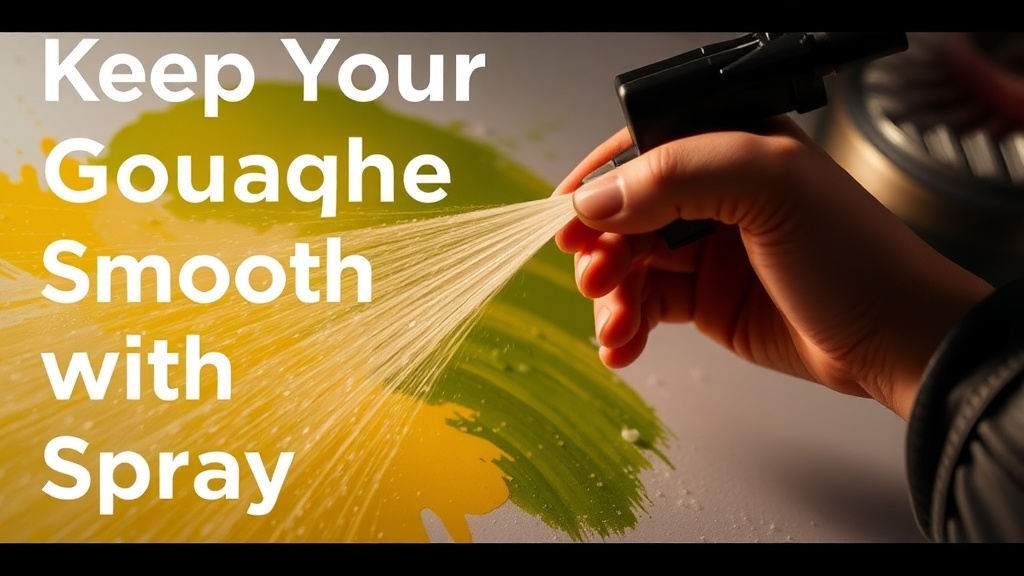
Keep Your Gouache Smooth with a Misting Spray

Quick Tip
Use a fine mist spray bottle to add moisture to your gouache palette to prevent the paint from hardening and cracking.
Ever wonder why your gouache dries into a crusty, uneven mess before you've even finished a single layer? If you've noticed your paint drying too quickly on the palette or cracking on the paper, you're likely dealing with evaporation issues. This tip explains how a fine misting spray can keep your paints workable for much longer.
Why Does Gouache Dry So Fast?
Gouache dries through rapid evaporation, which is why it can become unworkable in minutes if your studio is dry or warm. Unlike oil paints, gouache is water-based and highly sensitive to humidity levels. If the water leaves the pigment too quickly, you'll end up with streaks or "blooming" where the paint becomes uneven. (It’s a frustrating way to lose a good session, trust me.)
To manage this, you need to control the moisture levels in your immediate workspace. A simple misting tool helps maintain a consistent environment for your palette. You can find more about the chemistry of pigments and binders on the Wikipedia page for Gouache.
What is the Best Way to Use a Misting Spray?
The best way to use a misting spray is to apply a very fine, light cloud of distilled water over your palette rather than spraying the paper directly. You want to avoid heavy droplets that might cause "pitting" or uneven texture in your paint layers.
Here is a quick guide on the different types of tools you might use:
- Continuous Fine Mist Sprayers: These provide a consistent, ultra-fine cloud that's perfect for a light refresh.
- Standard Spray Bottles: Good for general humidity, but watch out for large droplets—they can ruin a smooth wash.
- Airbrush Tools: Highly precise, but usually overkill for just keeping a palette wet.
If you're working with heavy pigments, you might find that mixing your own watercolor sets requires similar moisture control to keep things consistent. Using distilled water is a smart move here because it lacks the minerals found in tap water that can cause buildup or unexpected color shifts.
How Much Water Should I Spray?
You only need a tiny amount of moisture to keep the paint active—think of it as a light dew rather than a soak. If you overdo it, you'll end up with a watery mess that loses its opacity. A single, short burst from a high-quality sprayer like a Flairosol bottle is usually plenty.
| Method | Best For... | Risk Level |
|---|---|---|
| Light Mist | Maintaining palette wetness | Low |
| Direct Spray | Quickly thinning a wash | Medium (can cause streaks) |
| Heavy Spray | Cleaning a palette | High (causes pigment clumps) |
Keep a small damp brush nearby to stir in a drop of water if the pigment starts to feel "draggy." This keeps your colors vibrant and prevents that dreaded chalky finish. It's a simple habit that makes a massive difference in your final results.