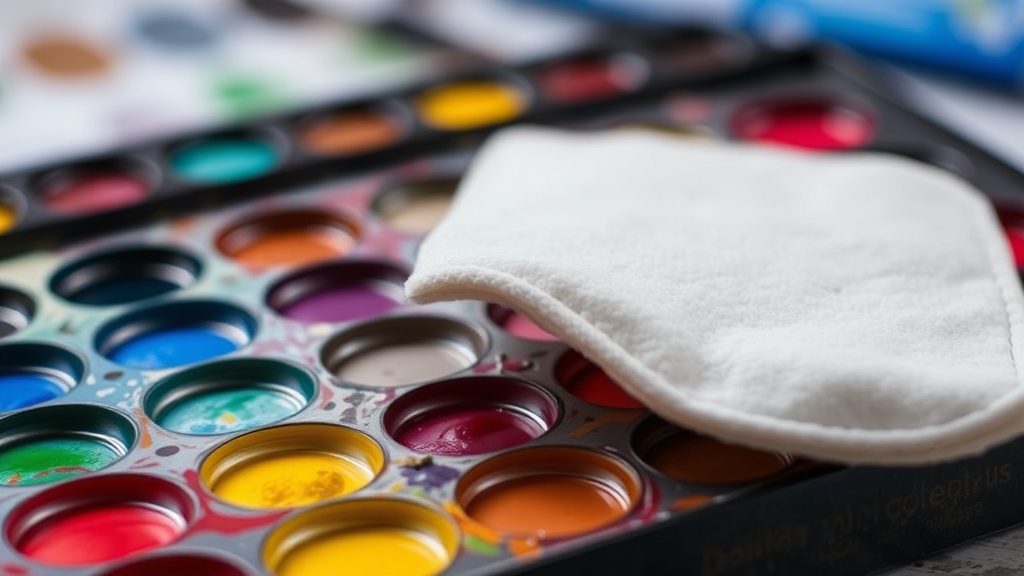
Clean Your Watercolor Palettes with a Damp Cotton Pad

Quick Tip
Use a damp cotton pad to gently lift dried pigment from palette wells without scratching the surface.
You’ve just finished a long painting session, and your watercolor palette looks like a muddy battlefield. Instead of scrubbing your pans with a brush or a paper towel—which often leaves behind lint or scratches the surface—you can use a damp cotton pad to restore your colors. This method keeps your expensive pigments clean without the mess of a full wash-out.
How Do I Clean Watercolor Pans Without Damaging Them?
Use a slightly damp cotton pad to gently lift pigment residue from the edges of your pans. Start by taking a small piece of a standard cotton round or even a makeup pad. Dampen it with clean water—not soaking wet, just moist—and lightly swipe the edges of the dried paint. This prevents the "bleeding" effect where one color contaminates another during your next session.
If you're working with high-end brands like Winsor & Newton, you'll want to be especially careful. These pans are often quite delicate. A heavy-handed scrub can actually lift the pigment right out of the pan, which is a waste of good paint.
Here is a quick comparison of cleaning methods:
| Method | Pros | Cons |
|---|---|---|
| Damp Cotton Pad | Gentle, precise, no lint | Requires manual dexterity |
| Water Brush | Fast, easy | Can cause color bleeding |
| Paper Towel | Highly absorbent | Leaves lint behind |
Can I Use This Method for Gouache Too?
Yes, you can use a damp cotton pad for gouache, but you must be much faster because gouache is water-soluble and dries differently than watercolor. If you've been experimenting with thick textures, you might find that a mixing textures with found sand and gesso approach leaves much tougher residue that a simple pad won't touch.
The key is to work in small increments. Don't try to clean the whole palette at once. Instead, focus on the rims and the gaps between the pans. This prevents the "muddy" look that happens when wet paint travels across the palette.
Why Does My Palette Still Look Dirty?
Residual pigment often hides in the tiny crevices between the pans or at the very bottom of the tray. If a damp pad isn't doing the trick, it's likely because the pigment has become a hard crust.
In those cases, try these steps:
- The Blotting Method: Press a damp pad firmly against the edge to lift the "crust" without scrubbing.
- The Single Drop Trick: Add one drop of water to the edge to soften it before wiping. This is similar to reviving dried acrylic paint, but much more subtle.
- The Detail Brush: Use a tiny, worn-out brush to clear the gaps where the cotton pad can't reach.
Keep a stack of cotton pads nearby. It’s a cheap, effective way to keep your workspace organized. It's much better than letting the paint dry into a hard, unusable mess—trust me, I've been there.