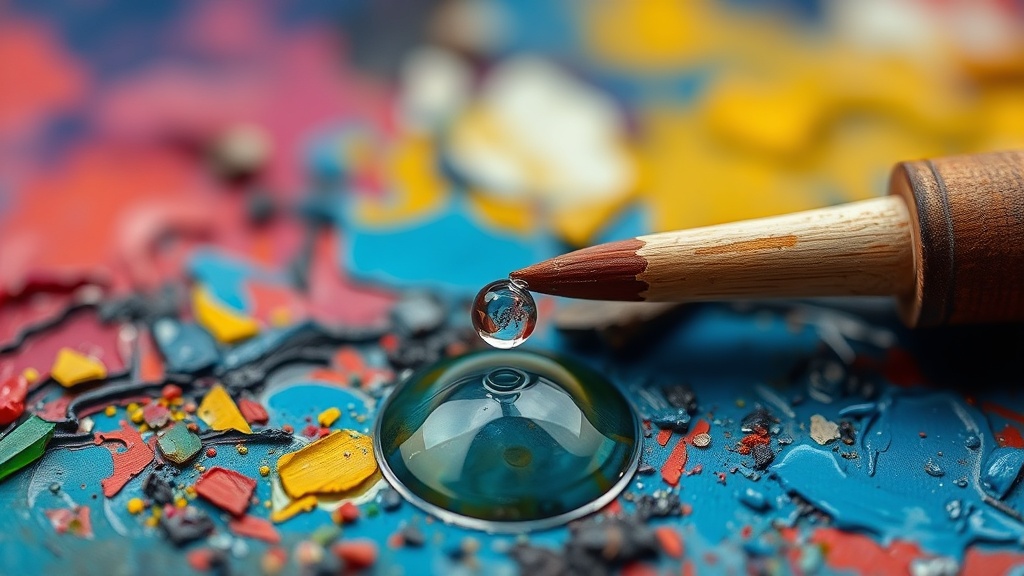
Reviving Dried Acrylic Paint with a Single Drop

Quick Tip
A tiny drop of water or acrylic medium can breathe life back into slightly dried-out paint.
A thick, crusty layer of neon pink sits at the bottom of a heavy heavy-duty plastic tube. It looks completely useless, like a piece of solid plastic rather than paint. This happens when the water in your acrylics evaporates, leaving behind a stubborn, dried-out-looking mess. You don't need to throw that tube away just yet.
This tip focuses on a simple trick to bring those semi-dried acrylics back to a usable consistency using just a tiny bit of liquid. It's a quick way to save money and reduce waste in your studio.
Can You Revive Dried Acrylic Paint?
Yes, you can revive acrylic paint that has thickened or partially dried by adding a small amount of water or a specialized acrylic medium. Most acrylic paints are water-based, meaning they rely on a polymer binder that can be softened with moisture. If the paint is still somewhat pliable—not a rock-hard solid—a little liquid will do the trick.
I've found that using a high-quality medium works better than plain water for long-term results. For example, Liquitex offers various mediums that help maintain the paint's integrity while thinning it out. Water is fine for a quick fix, but it can sometimes weaken the binder if you use too much.
What is the Best Way to Thin Acrylic Paint?
The best way to thin your paint is to add liquid drop by drop while stirring constantly to avoid clumps. If you're working with a tube, squeeze a small amount of the "stiff" paint onto a palette first. This prevents you from ruining the entire tube if your first attempt goes sideways (and trust me, it happens).
Here is a quick guide on what to use depending on your goal:
- Distilled Water: Best for a quick, cheap fix to loosen up pigment.
- Acrylic Glaze: Perfect if you want to keep the transparency but add flow.
- Flow Improver: Use this if the paint is too thick to move smoothly across the surface.
One thing to watch out for is the "crust" at the edges. If the paint has already turned into a hard, unyielding shell, it might be too late. You'll want to act as soon as the texture feels slightly "rubbery" rather than liquid.
Avoid Common Mistakes
Don't over-dilute. If you add too much water, you'll end up with a runny, weak pigment that won't stick to your canvas. It's better to add a single drop, stir for a minute, and then decide if you need more. It's a game of patience, not speed.
If you're also struggling with your tools, don't forget to save your brushes with a simple salt soak to keep your setup in top shape. A clean brush makes a massive difference when working with thicker, revived paints.
| Additive | Effect on Paint | Best For... |
|---|---|---|
| Water | Reduces viscosity | Basic thinning |
| Acrylic Medium | Maintains texture | Professional layering |
| Flow Improver | Increases movement | Detail work |