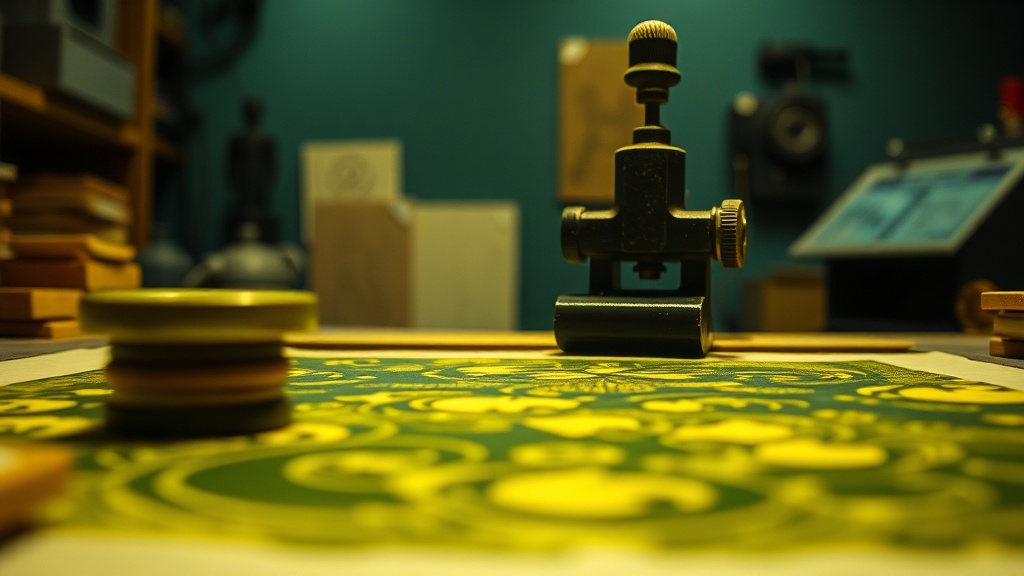
Making Better Linocut Prints Without a Professional Studio Press

Why do your linocut prints come out patchy even when you follow the instructions?
Getting a clean, professional-looking relief print at home is often more about physics and patience than it is about expensive equipment. This guide covers the specific mechanics of carving, inking, and hand-burnishing linoleum blocks—explaining why certain materials fail and how to troubleshoot the most common frustrations in the printmaking process. Whether you are working on a kitchen table in Asheville or a dedicated corner of your garage, understanding the relationship between tool sharpness, ink viscosity, and paper choice is the only way to move past amateur results.
What supplies do you really need for a home linocut setup?
You don't need a thousand-dollar etching press to make great art, but you do need tools that won't fight you. I have seen too many beginners get discouraged because they started with dull blades and plastic brayers that don't roll straight. If you want to take this seriously, you should invest in a few high-quality items rather than a big kit of mediocre ones. For instance, battleship grey linoleum is the industry standard for a reason; it is firm enough to hold fine detail but soft enough to carve smoothly when slightly warmed.
| Item | Recommended Type | Why it Matters |
|---|---|---|
| Linoleum | Traditional Battleship Grey | Holds detail better than 'soft-cut' rubber. |
| Gouges | Pfeil or Flexcut palm tools | Sharper steel requires less force and is safer. |
| Ink | Oil-based (Water-miscible) | Dries slower and gives a richer black than acrylic. |
| Brayer | Soft rubber (40-50 durometer) | Conforms to the block's surface for even inking. |
| Paper | Japanese Hosho or Masa | Absorbs ink well without needing heavy pressure. |
The brayer (the roller) is perhaps the most underrated part of your kit. A hard plastic roller will skid across the surface of the ink, whereas a soft rubber one will actually pick up and distribute the pigment evenly. I always suggest starting with water-miscible oil inks, like those from