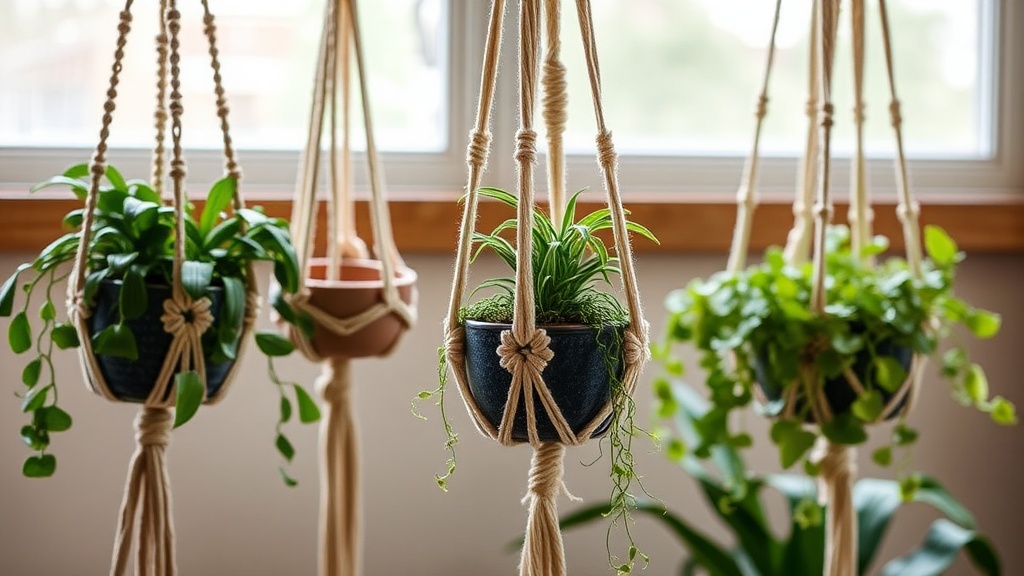
DIY Macrame Plant Hangers: Create Boho Home Decor in One Afternoon

This guide walks through creating handmade macrame plant hangers from start to finish — covering knot techniques, cord selection, and styling tips that transform empty corners into Instagram-worthy boho displays. Whether working with zero experience or looking to refine existing skills, you'll leave with a finished piece ready to hang by dinnertime. Macrame has surged back into mainstream decor (Pinterest searches jumped 367% in the past three years), and plant hangers remain the perfect entry project — low material cost, forgiving mistakes, and immediate visual payoff.
What Supplies Do You Need to Make a Macrame Plant Hanger?
You'll need three things: cord, a ring, and scissors. That's it.
Start with 3mm cotton macrame cord — it's the sweet spot for beginners. Too thin and the knots slip; too thick and your hands cramp. Brands like Ganxxet and Etsy sellers specializing in natural fibers offer reliable options. For a standard 35-inch hanger holding a 6-inch pot, grab 100 feet of cord. Buy 200 feet if you want practice room for mistakes — because they'll happen, and that's fine.
Wooden rings (2-inch diameter) cost pennies at craft stores like Michaels or Hobby Lobby. Metal rings work too, though they add industrial weight some find jarring against soft cotton. Skip the fancy brushed brass for your first attempt — plain unfinished wood hides beginner imperfections better.
Tools worth having nearby:
- Sharp fabric scissors (kitchen shears fray cord ends)
- Measuring tape
- Comb or pet brush for fringe
- Masking tape to secure your working ring
Here's the thing — don't overthink the cord color. Natural undyed cotton teaches you how light interacts with texture. Once confident, branch into mustard yellows, sage greens, or rust oranges that dominate current boho palettes.
How Do You Tie the Basic Macrame Knots for Beginners?
Four knots build 90% of plant hanger designs: Lark's Head, Square Knot, Spiral Stitch, and Gathered Knot.
Master these and every pattern on Pinterest becomes readable. Practice on a cord scrap before committing to your full project — muscle memory develops faster than you'd expect.
The Lark's Head (Mounting Knot)
This attaches cords to your ring. Fold one cord in half, pass the loop under the ring, then pull the cord ends through that loop. Tighten. Repeat with seven more cords until sixteen strands hang down. That's your foundation.
The Square Knot
Take four strands — two outer "working" cords and two inner "filler" cords. Pass the left cord over the fillers and under the right cord. Pass the right cord under the fillers and through the left loop. Pull tight. Now reverse: right over fillers, under left; left under fillers, through right loop. One complete square knot.
It sounds complicated written out. Watch slow-motion tutorials on YouTube — visual learning clicks faster here.
The Spiral Stitch
Make half a square knot (just the first step) repeatedly. The twist happens automatically. Stop after 20-25 iterations for a standard spiral section. The result mimics rope texture and adds visual rhythm between flat knot sections.
The Gathered Knot (Finisher)
When ready to close the hanger bottom, wrap a separate 12-inch cord around all strands 6-8 times. Thread the wrap cord through its own loop, pull the top tail to hide the knot inside, then trim. Clean, invisible finish.
The catch? Tension consistency matters more than perfection. Slightly uneven knots add handmade character — machine-precision macrame looks sterile anyway. Marcus Côté (the voice behind Crafting Corner) always tells workshop students: "If your hanger looks too perfect, you didn't have enough fun making it."
What Is the Easiest Macrame Plant Hanger Pattern for Beginners?
A four-section design with alternating square knots and spiral stitches takes roughly 90 minutes and requires zero pattern-reading experience.
After mounting eight cords (16 strands) to your ring, separate into four groups of four. Work square knots for 4 inches on each group. Then split the groups — take two cords from one section and two from the neighboring section, creating new four-cord groups offset by one strand. Square knot these new groups for 3 inches. This creates the classic diamond "net" that cradles pots.
Continue alternating: spiral stitch sections for texture, square knot sections for structure. End with a gathered knot 4 inches below where your pot bottom will sit. The pot's weight actually tightens the design — physics does half the work.
| Design Element | Difficulty | Time Required | Best For |
|---|---|---|---|
| Simple Square Knot Only | Beginner | 45 minutes | First-timers, kids' projects |
| Square + Spiral Alternating | Beginner-Intermediate | 90 minutes | Standard home decor |
| Multi-Level (2+ pots) | Intermediate | 3 hours | Statement pieces, gifts |
| Complex Patterns (berry knots, leaves) | Advanced | 4+ hours | Experienced crafters, sales inventory |
Worth noting: oversized pots (10+ inches diameter) need thicker 5mm cord and additional knot rows for structural integrity. That ceramic monstera planter from Anthropologie? It probably weighs 8 pounds empty — respect the physics or face shattered pottery.
How Do You Style Macrame Plant Hangers in Modern Homes?
Placement transforms these pieces from craft projects to design statements. The corner by your window that gets ignored? That's prime real estate. Macrame hangers draw eyes upward — exactly where most rooms have dead space.
Groupings work better than singles. Hang three at staggered heights in a clustered arrangement: 24 inches, 36 inches, and 48 inches from the ceiling. Use pots in coordinating tones — terracotta, cream ceramic, and weathered concrete create cohesive variety. Avoid matching sets — they look catalog-ordered rather than curated.
Plants matter as much as the hanger. Pothos and trailing philodendrons drape beautifully through the knots. Spider plants send babies cascading down. For modern minimalism, try a single snake plant in a cylindrical pot — the vertical lines complement hanger geometry.
That said, don't limit yourself to live plants. Dried pampas grass, dried bunny tails, or even bare branches in winter months maintain the sculptural element without maintenance pressure. Asheville's craft community — where Marcus Côté bases operations — has embraced this "seasonal swap" approach, treating hangers as permanent fixtures while rotating contents quarterly.
How Do You Care for Handmade Macrame Plant Hangers?
Cotton cord attracts dust like any textile. Every few months, remove the plant and shake the hanger outside — most debris falls away immediately. For deeper cleaning, spot-treat with mild soap and water, then air dry completely before rehanging. Never machine wash — the agitation frays fibers and distorts knot shapes.
Direct sun exposure fades natural cotton over 12-18 months. If your hanger lives in a south-facing window, embrace the gradual color shift as patina or rotate it with a backup piece every six months. Dyed cords fade faster than undyed — another reason to start neutral.
Check weight capacity seasonally. Wet soil adds significant heft after watering. If knots appear compressed or stretched, it's time to retire that hanger to lighter duty — maybe a dried arrangement or children's room decor.
Macrame plant hangers reward patience without demanding perfection. The afternoon invested pays dividends in personalized decor that costs a fraction of West Elm alternatives — and carries the quiet satisfaction of handmade craftsmanship. Start simple, finish proudly, then start planning your next one.