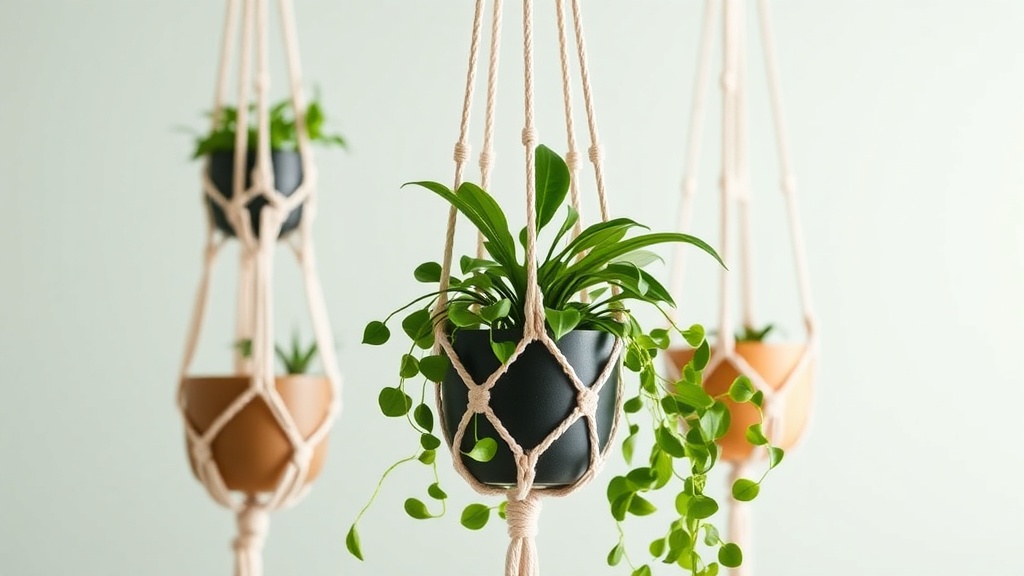
DIY Macrame Plant Hangers: A Step-by-Step Guide for Beginners

This guide walks through everything needed to create beautiful macrame plant hangers from scratch—no prior experience required. By the end, you'll understand the basic knots, know exactly which materials to buy, and have a complete project plan that transforms empty corners into lush, vertical gardens. Macrame has exploded in popularity (Pinterest searches are up 40% year over year), and for good reason: it's affordable, meditative, and produces stunning results that look far more expensive than they actually cost.
What Materials Do You Need for Macrame Plant Hangers?
You'll need three core items: cotton cord, a metal or wooden ring, and scissors. That's it. The beauty of macrame lies in its simplicity—no needles, no glue, no fancy equipment.
For beginners, 3mm to 5mm single-twist cotton cord works best. The Ganxxet brand offers excellent quality at around $15 for 100 yards—plenty for several projects. Avoid bargain-bin cord from big-box stores; it frays easily and makes learning knots frustrating.
Here's a complete shopping list:
- Cotton cord: 3mm or 5mm, natural or dyed (50-100 yards for your first hanger)
- Metal ring: 2-inch welded ring for hanging (wooden rings work too)
- Sharp scissors: Fabric scissors make cleaner cuts
- Measuring tape: For cutting consistent cord lengths
- Comb or brush: Optional, for fraying ends into tassels
- Plant pot: 4-8 inch diameter works best for beginners
The catch? Cord thickness changes everything. Thinner cord (2-3mm) creates delicate, intricate patterns but requires more knots and time. Thicker cord (5-7mm) works faster and makes bolder statements—though the finished piece weighs more. Most beginners find 4mm cord hits the sweet spot.
As for the plant itself, trailing varieties like pothos, philodendron, or string of pearls look spectacular spilling from macrame holders. That said, any lightweight pot works—just avoid anything over 10 pounds unless you're using heavy-duty mounting hardware.
| Cord Size | Best For | Knot Visibility | Project Time |
|---|---|---|---|
| 2-3mm | Intricate patterns, small pots | Detailed, delicate | 3-4 hours |
| 4mm | All-purpose beginners | Balanced definition | 1-2 hours |
| 5-7mm | Bold statement pieces | Large, chunky texture | 45-90 minutes |
How Do You Tie the Basic Macrame Knots?
Every macrame plant hanger uses just three fundamental knots: the Lark's Head, Square Knot, and Gathering Knot. Master these, and you can make thousands of different designs.
The Lark's Head Knot attaches cords to your ring. Fold a cord in half, loop it over the ring, then pull the loose ends through the loop. Tighten. Repeat with 8 total cords (4 folded lengths) for a standard hanger.
The Square Knot forms the body of your design. Take four cords. The left cord crosses over the two middle cords and under the right cord. Now the right cord goes under the middle cords and through the left loop. Pull tight—that's half the knot. Reverse the process (right over middle, left under and through) to complete it. Square knots create flat, decorative sections.
The Gathering Knot finishes your piece. Make a small loop with a separate 12-inch cord, lay it against your main cords, then wrap the long end around both the loop and the main cords about 10 times. Thread the end through the bottom of your loop, pull the top of the loop to hide it inside the wraps, then trim. This creates that tidy bundled look at the bottom.
Here's the thing—tension matters more than speed. Consistent tightness separates amateur-looking pieces from professional ones. Practice on a spare cord first. Your hands will develop muscle memory after just one completed hanger.
Worth noting: macrame cord has a "twist" direction. If your knots look lumpy, try flipping your work—the cord might be twisting against you. Some crafters work with a clipboard or macrame board (available from Michaels for $12-20), though a table edge works fine for beginners.
How Long Should Your Macrame Cords Be?
Cut cords eight times your desired finished length. For a standard 3-foot hanging planter, that means 24-foot cords—yes, really. Macrame consumes cord quickly with all those overlapping knots.
Specifically, for a beginner's hanger holding a 6-inch pot:
- Cut 8 cords, each 24 feet long (8 x 3 feet)
- Fold them in half over your ring—you now have 16 working strands
- Leave 2-3 inches of loop above the ring for your hook
- The "body" section uses about 18 inches of knots
- The "basket" that cradles the pot needs another 8-10 inches
- Finish with 6-8 inches of tassel below
Running short mid-project happens to everyone. The fix? Cut a new cord, tie it to your existing one with a tight Square Knot, and position that knot where it'll be hidden—inside the basket weave or behind a decorative section. Never try to "stretch" your cord by making looser knots; the uneven tension screams homemade in the wrong way.
That said, extra length beats shortage every time. Those long cords tangle—no way around it. Wind each working end around a clothespin or bobbin (clover bobbins from yarn stores work perfectly) to prevent the dreaded macrame spaghetti. Some crafters hang their ring from a shower curtain rod or ceiling hook so cords d downward while working.
What Are the Best Beginner Macrame Plant Hanger Patterns?
Start with the Spiral Hanger—it's one continuous knot repeated for the entire length. Seriously, that's it. Once you learn the Half Square Knot (just half of what we covered earlier), you alternate the same hand motion 50 times and watch a natural spiral emerge. The result looks far more complex than the skill required.
The Standard Four-Strand Hanger offers more structure. Work Square Knots in alternating groups—knots 1-4 for two rows, then knots 5-8, creating a checkerboard effect. This basket weave cradles pots securely and looks classic in any decor style.
For the adventurous beginner, the Diamond Pattern adds visual interest. Work rows of Square Knots, then split your cords and recombine them with neighboring groups every third row—diamond shapes appear automatically. This technique appears in high-end macrame pieces selling for $60-80 on Etsy.
Here's a truth bomb: your first hanger won't be perfect. Cord tension varies. Knots loosen. One side ends up slightly longer. These "flaws" give handmade pieces character—mass-produced versions from Anthropologie cost $45+ and look sterile by comparison.
Pattern Difficulty Breakdown
- Spiral Hanger: 30 minutes, single repeated knot, great for learning tension
- Standard Square Knot: 60 minutes, alternating patterns, most versatile design
- Diamond Pattern: 90 minutes, cord splitting technique, impressive results
- Multi-Tier Hanger: 2-3 hours, combines multiple techniques, holds 2-3 plants
How Do You Finish and Hang Macrame Plant Hangers?
The final steps determine whether your creation lasts years or unravels in weeks. After completing your knots, comb out the bottom cord ends with a metal dog comb or your fingers to create soft tassels. Alternatively, trim them cleanly with sharp scissors for a modern look.
Mounting requires thought. A standard ceiling hook holds 10-15 pounds—fine for small plants in macrame. Heavier setups (large ceramic pots, mature plants) need wall anchors, stud mounting, or swag hooks rated for 30+ pounds. The Command brand makes damage-free hooks claiming 5-pound capacity, but moisture and weight fluctuations make them risky for living plants.
Placement matters for plant health, not just aesthetics. South-facing windows burn leaves through macrame shadows. North-facing light creates dramatic silhouettes but may not support photosynthesis. Most trailing plants want bright, indirect light—east or west windows hit the sweet spot.
Maintenance keeps pieces beautiful. Dust settles in cord crevices; vacuum gently with a brush attachment every few months. Spilled soil or water stains? Spot-clean with mild soap, then air dry completely before rehanging—damp macrame grows mildew fast.
The best part about learning macrame? Skills transfer. Those same three knots make wall hangings, jewelry, coasters, and market bags. Crafters in Asheville (Marcus Côté included) often sell plant hangers at local markets for $25-40—materials cost under $5. Whether crafting for personal satisfaction or side income, macrame delivers serious bang for your time investment.
Grab some cord, clear an afternoon, and knot your first hanger. The plants—and your walls—will thank you.