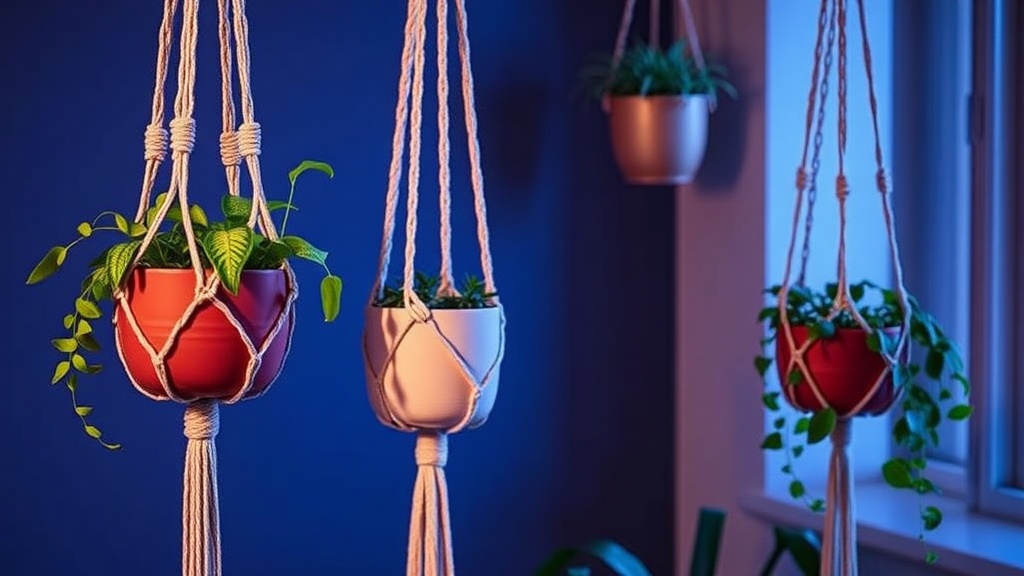
DIY Macramé Plant Hangers: A Step-by-Step Guide for Beginners

What Is Macramé and Why Is It Perfect for Beginners?
Macramé is a textile art form that uses knotting techniques—rather than weaving or knitting—to create decorative patterns and functional items. The beauty of macramé lies in its accessibility: no needles, no hooks, no expensive equipment. Just cord, hands, and patience. For beginners looking to add handmade charm to living spaces, macramé plant hangers offer an ideal entry point into this craft. They require minimal materials, can be completed in an afternoon, and produce stunning results that transform any room into a green oasis.
The resurgence of macramé isn't just nostalgia—it's practicality meeting aesthetics. Modern plant hangers work in apartments, sunrooms, and covered porches. They free up floor space and draw the eye upward, creating visual interest where walls meet ceilings. And unlike store-bought versions that cost $40-80 at retailers like Anthropologie or West Elm, DIY versions run under $10 in materials.
What Supplies Do You Need to Make a Macramé Plant Hanger?
To make a basic macramé plant hanger, you'll need macramé cord (3mm-5mm cotton rope works best), a pair of sharp scissors, a measuring tape, and a mounting ring or wooden dowel. That's it—seriously. Many beginners overcomplicate the supply list, thinking they need specialized tools or exotic fibers. The truth? A simple cotton cord from Michaels or a craft store will produce professional-looking results.
Here's the thing about cord selection: material matters more than brand. Cotton cord frays beautifully and holds knots securely. Braided cord offers strength but can be slippery for beginners. Twisted cord—the most common type—unwinds slightly at cut ends, creating a soft fringe that many makers prefer. For a standard four-arm hanger that holds a 6-8 inch pot, you'll need approximately 50-60 feet of cord.
| Cord Type | Best For | Price Range (per 100ft) | Difficulty Level |
|---|---|---|---|
| 3mm Single-Twist Cotton | Delicate hangers, small pots | $8-12 | Beginner |
| 5mm Braided Cotton | Heavy plants, outdoor use | $12-18 | Intermediate |
| 4mm Recycled T-Shirt Yarn | Eco-conscious projects | $10-15 | Beginner |
| 6mm Jute/Rope Blend | Rustic, farmhouse style | $6-10 | Beginner |
Don't skimp on scissors. Sharp fabric shears (like Fiskars or Gingher) make clean cuts that don't fray prematurely. Dull scissors crush cord fibers, leading to weak points where knots might slip. Worth noting: many makers keep a small bowl of clear nail polish nearby to seal cut ends if working with particularly fray-prone materials.
What Are the Basic Knots Every Beginner Should Learn?
Every macramé plant hanger—even the most elaborate designs—builds from just three foundational knots: the Lark's Head knot (for mounting cord to a ring), the Square Knot (the workhorse of macramé patterns), and the Spiral Stitch (which creates twisting, rope-like sections). Master these three, and you can create dozens of distinct hanger styles.
The catch? Knot tension separates amateur work from professional-looking pieces. Consistent tension—pulling each knot with similar force—creates even, symmetrical patterns. Inconsistent tension produces wobbly, lopsided hangers that hang crooked. Here's a pro tip: work standing up. Gravity becomes your ally, helping cords hang straight and making tension easier to control.
The Lark's Head Knot
This is your starting point. Fold a cord in half, pass the loop under your mounting ring, then pull the cord ends through the loop. Pull tight. Repeat with remaining cords until eight strands hang from your ring. That's it—you've mounted your cords. Eight strands (four cords, folded) create a standard four-arm hanger.
The Square Knot
Take four strands. The two center strands are your "filler"—they don't move. The two outer strands do the work. Cross the left cord over the center strands, forming a loop. Pass the right cord over the left tail, behind the center strands, and through the loop. Pull tight. You've made half a square knot.
Now reverse: right cord over center, left cord over right tail, behind center, through the loop. Pull tight. That's one complete square knot. Repeat this pattern, and you'll create flat, decorative bands. Space these evenly down your cords, and they'll form the basket that cradles your pot.
The Spiral Stitch
Here's where it gets interesting. Instead of alternating left-right-left-right like a square knot, keep starting from the same side—always left, or always right. The knots naturally twist, creating a spiral rope effect. This adds texture and visual interest to hanger arms. Ten to fifteen spiral knots per section usually suffices.
How Do You Make a Simple Four-Arm Plant Hanger?
A four-arm plant hanger features four groups of cords that meet beneath the pot, creating a secure cradle. The basic structure goes: gathering knot at top (just below the ring), two sections of square knot patterns on each arm, then all cords reuniting at the bottom with a final gathering knot.
Start by cutting eight cords, each 15 feet long. Yes, that seems excessive—macramé uses more cord than you'd expect. Better too long than too short; you can always trim excess. Mount all eight cords to your ring using Lark's Head knots.
About 3 inches below the ring, tie a Gathering Knot. This brings all cords together neatly. Here's how: take a separate 12-inch cord and form a U-shaped loop against your main cords, pointing upward. Wrap the long end around everything—main cords and the loop—about six times, working downward. Pass the wrapping end through the loop at the bottom. Pull the top loop tail, drawing the bottom loop (and wrapping end) up inside the wrapped section. Pull tight, trim ends.
Now separate cords into four groups of two strands each. These are your four arms. On each arm, tie 8-10 square knots, spacing them evenly. The catch? You need identical knot counts on all four arms, or your hanger will hang crooked. Count carefully.
About 8-10 inches below your square knot sections, bring the arms back together. The pot sits in this space between the upper knots and the reunion point. Tie another gathering knot with all cords, positioned so your pot (when inserted) rests securely with its rim about 2 inches above the lower gathering knot.
Finish with a decorative tassel—simply trim cord ends evenly, or unravel them for a fluffy fringe. Some makers add wooden beads above the lower gathering knot for a boho touch. Jo-Ann Fabrics carries inexpensive wooden craft beads in various sizes.
How Long Does It Take and What Mistakes Should Beginners Avoid?
A simple four-arm hanger takes 2-3 hours for a first-timer. That includes cutting, mounting, knotting, and finishing. Speed comes with practice—experienced makers complete basic hangers in 45 minutes. The key is batching: cut all cords first, then knot continuously without stopping to measure repeatedly.
Common beginner mistakes are easily avoided. Cutting cords too short ruins projects—you can't extend cord. Measuring against your own pot (not a generic tutorial's dimensions) prevents fit issues. And working with tangled cord wastes more time than the five minutes it takes to wind cords neatly before starting.
That said, mistakes aren't disasters. Crooked knots can be untied and retied. Uneven arms can be adjusted before the final gathering knot. Macramé is forgiving; the cord remembers its shape even after multiple re-knotting attempts. Many makers keep a "first hanger" as a reminder of progress—that wobbly, uneven piece represents learning, not failure.
Once you've mastered the basic four-arm design, variations abound. Add beads between knots. Experiment with alternating square knots and spiral sections. Create longer arms for hanging from high ceilings. Combine multiple hangers at staggered lengths for a dramatic corner installation. The skills transfer—what you learn making one hanger applies to wall hangings, coasters, and even small bags.
Ready to start? Gather supplies this weekend. Pick a plant that needs a home—pothos, philodendron, and spider plants all thrive in macramé hangers. And remember: the goal isn't perfection. It's creating something functional and beautiful with your own two hands. That craft—transforming simple cord into something that brings life to your space—is what macramé is all about.