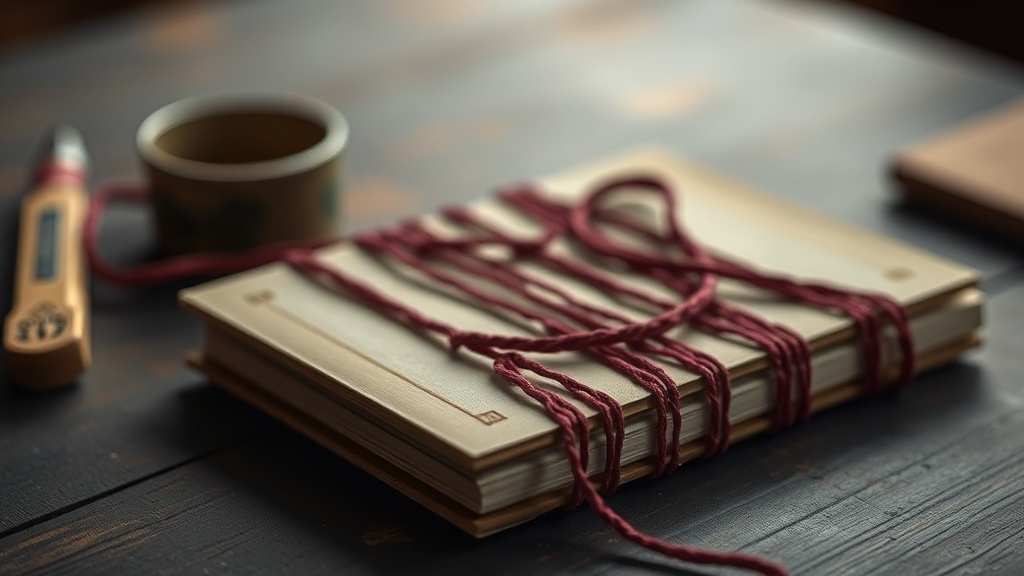
Coptic Stitch Bookbinding: Create Lay-Flat Journals Without Glue

This guide walks you through Coptic stitch bookbinding—a centuries-old technique that creates beautiful, lay-flat journals without using any adhesives. You'll learn how to prepare your materials, punch consistent holes, and execute the chain stitch that gives Coptic books their distinctive exposed spine. Whether you're making a sketchbook, a notebook for writing, or a handmade gift, this method offers durability and flexibility that glued bindings simply can't match.
What Makes Coptic Stitch Different from Other Binding Methods?
Most commercially produced books use perfect binding—pages are glued directly to the spine. It works fine until you try to open the book flat, and suddenly pages start detaching or the spine cracks. Coptic stitch solves this problem elegantly by sewing the book block directly to the cover boards using a chain stitch that loops across the spine.
The result? A book that opens completely flat—perfect for sketching, writing, or working across two-page spreads. The exposed spine becomes a decorative feature rather than something hidden. You can see the thread pattern, which means your choice of linen or waxed cord becomes part of the design. Different colored threads, varied stitch patterns, and even beaded elements can transform a simple notebook into a piece of functional art.
Unlike Japanese stab binding (which also uses visible stitching but doesn't allow the book to open flat), Coptic stitch creates a hinge effect at each sewing station. The thread loops allow the pages to move independently of the cover while maintaining a strong connection. This technique dates back to second-century Egypt—early Coptic Christians used it to bind their texts, and the method has survived because it simply works well.
What Materials Do You Need for Your First Coptic Stitch Journal?
One of the best things about this binding style is that it requires minimal investment. You don't need bookbinding presses, heavy equipment, or specialized adhesives. Here's what you'll actually use:
- Text block paper: 20-40 sheets of your chosen paper, folded into signatures (groups of 4-8 folded sheets). Text weight paper (80-100 gsm) works well for writing; heavier paper (150+ gsm) suits sketchbooks.
- Cover boards: Book board, binder's board, or heavy chipboard cut to size. You can also use recycled materials—old record album covers, thick cardboard, or even wood panels for a more sculptural approach.
- Awl or drill: For punching holes through the signatures and covers. A Japanese screw punch makes clean holes but a simple bookbinding awl works perfectly for beginners.
- Waxed linen thread: 25/3 or 18/3 weight is standard. The wax coating prevents tangling and adds strength. Alternative options include waxed cotton cord or even dental floss in a pinch.
- Needle: A curved bookbinding needle or large tapestry needle with an eye big enough for your thread.
- Beeswax: If your thread isn't pre-waxed, run it across a block of beeswax before sewing—it makes a significant difference in handling.
- Pencil, ruler, and scrap paper: For marking hole placement and creating a sewing template.
Paper choice matters more than you might expect. Highly textured watercolor paper creates friction that makes page-turning difficult in a Coptic-bound book. Smooth papers work beautifully. If you're using drawing paper with some tooth, consider the direction of the grain—folding with the grain (parallel to the long edge for most writing papers) creates cleaner creases and allows the book to open more easily.
How Do You Prepare Signatures and Mark Sewing Stations?
Preparation determines whether your finished book looks handmade (in the good way) or homemade (in the not-so-good way). Take your time with these steps.
First, fold your paper into signatures. A signature is simply a group of folded sheets nested together. For a standard journal, four sheets per signature works well—this creates 16 pages per signature when you count front and back. Use a bone folder to crease each fold firmly; the sharper your creases, the neater your spine will look.
Next, create a sewing template. Cut a strip of scrap paper the height of your book. Mark your sewing stations—the holes you'll punch through both the signatures and the covers. For a basic Coptic stitch, four stations work well: one about 3/4 inch from the top, one about 3/4 inch from the bottom, and two evenly spaced between them. More stations create a more intricate spine pattern but also more work.
Clip your template to each signature and use your awl to punch through at each mark. Work carefully to keep holes straight and consistent—this is where sloppy work shows in the finished book. Punch from the inside of the signature outward to minimize paper tear-out. Then use the same template to punch matching holes in your cover boards.
What's the Step-by-Step Process for Sewing the Coptic Stitch?
Now for the actual binding. Thread your needle with about three times the height of your book block—better to have extra than run short mid-signature. You can sew the book block first (all signatures together) and then attach covers, or you can sew everything together in one pass. The latter creates a more integrated structure.
Start with the bottom cover and first signature. Enter from the outside of the cover through the bottom hole, leaving a 3-inch tail you'll weave in later. Exit through the same hole into the signature, then travel inside the signature to the next hole and exit. Continue across the signature.
When you reach the end of the first signature, lay your second signature on top. Enter through the first hole of the second signature from the outside (the same hole you just exited from the first signature). Here's where the chain stitch forms: loop your thread around the stitch connecting the first signature to the cover before exiting to the next hole. This creates the characteristic chain pattern visible on the spine.
Continue across, at each point looping around the stitch below before proceeding. When you reach the end of the second signature, add the third the same way. The pattern builds on itself—each new signature connects to the one below through these looped stitches.
For the top cover, sew through it from the inside out, just as you did with the bottom cover. When you reach the final hole, tie off with a square knot against the inside of the cover, then weave your remaining thread back through several stitches before trimming.
Common problems: If your stitches are too loose, the book feels floppy and pages gap. If too tight, the thread can tear through the paper or make the book hard to open. Aim for tension that holds everything snugly but allows the pages to turn freely.
How Can You Customize Your Coptic Bound Books?
Once you've mastered the basic stitch, variations open endless possibilities. Try these modifications:
Multiple colors: Change thread colors between signatures for a striped spine effect. Simply knot off one color and start the next, weaving ends into the binding.
Decorative stitch patterns: The basic chain stitch can be modified—add extra loops, create figure-eight patterns between stations, or incorporate beads onto the exposed spine threads. The bookbinding community has documented dozens of variations worth exploring.
Hard covers with wrapped edges: Instead of raw board edges, wrap your covers in book cloth, decorative paper, or leather before binding. This creates a more finished appearance and protects the board edges from wear.
Mixed paper: Combine different paper types within one book—watercolor paper in some signatures, lined paper in others, blank sheets elsewhere. This creates a versatile journal suited to multiple media.
Exposed spine protection: While the exposed spine is beautiful, it can collect dust. Some binders add a thin fabric strip behind the stitching or create a partial slipcase that protects the spine while leaving it visible.
For more advanced techniques and historical context, Keith Smith's works on non-adhesive binding remain the definitive references in the field. His diagrams clarify stitch mechanics that text descriptions struggle to capture.
Coptic stitch bookbinding rewards practice. Your first attempt probably won't be perfect—the holes might not align perfectly, the tension might vary, the covers might not sit quite square. That's entirely normal. By your third book, you'll develop muscle memory for the stitch pattern. By your tenth, you'll be making books that look professional and function beautifully.
The technique connects you to a craft tradition spanning nearly two millennia. Those early Coptic binders solved the same problems you're encountering: how to hold pages together durably, how to let books open flat, how to make something both useful and beautiful. Their solution—simple thread, careful holes, methodical stitching—still works today.
Start with a small practice book: 3-4 signatures, simple paper, basic materials. Once the mechanics feel natural, scale up to larger projects. Make a sketchbook sized for your bag. Create a wedding guest book that lays flat for easy signing. Bind your own journal for the coming year. The skills you develop here transfer to other binding styles too—once you understand how sewing structures work, you're ready to explore French link stitch, long stitch, or even more complex historical methods.