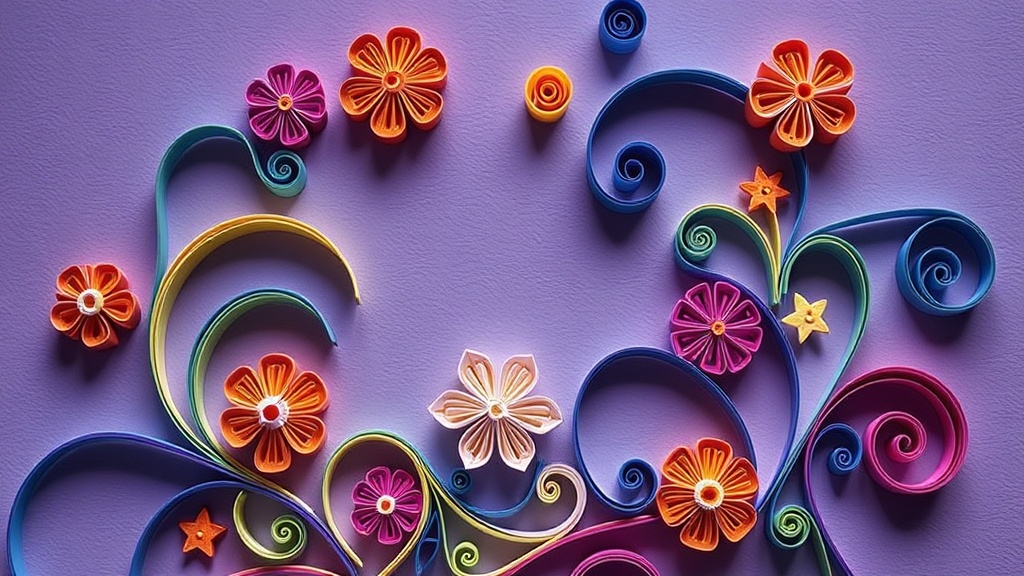
10 Easy Paper Quilling Patterns for Beginners

Paper quilling offers a satisfying entry point into paper crafts—transforming simple strips into decorative shapes that become greeting cards, wall art, jewelry, and more. This guide walks through ten beginner-friendly patterns that require minimal supplies and build real skills fast. Whether you're picking up a new hobby or looking for projects that don't demand a studio full of equipment, these techniques get you rolling (quite literally) within minutes.
What Supplies Do You Need to Start Paper Quilling?
At minimum, you'll need quilling paper strips, a slotted or needle tool, and glue. That's it.
Most beginners start with pre-cut paper strips—Quilled Creations and Lake City Crafts both sell 1/8-inch (3mm) packs in assorted colors. The paper weight matters: standard 80-100 GSM works best for learning. Thinner strips curl faster but tear easily; heavier stock holds shape but fights the tool.
For tools, the decision comes down to slotted versus needle. Here's how they stack up:
| Tool Type | Best For | Price Range | Learning Curve |
|---|---|---|---|
| Slotted quilling tool | Tight coils, beginners | $3-$8 | Low—slot grips paper automatically |
| Needle quilling tool | Loose coils, advanced work | $2-$6 | Medium—requires hand control |
| Corsage pin (DIY option) | Testing the craft | $1-$2 | High—no grip assistance |
You'll also want a circle template board (Quilled Creations makes a solid one for under $10), tweezers for placement, and PVA glue—Aleene's Original Tacky Glue sets quickly without warping paper. A toothpick helps with precision application.
What Are the Easiest Quilling Shapes for Beginners?
The tight coil and loose coil form the foundation of nearly every quilling project.
Here's the thing: most beginners try to rush into complex shapes. Don't. Master these two first, and everything else follows naturally.
The Tight Coil: Insert paper strip end into the tool slot (or wrap around needle). Roll toward you, keeping tension even. Remove, let expand slightly, glue the end. That's it. The coil shouldn't unravel when you set it down.
The Loose Coil: Same process—except let the coil expand fully before gluing. Pinch one side, and you've made a teardrop. Pinch two opposite sides, you have a marquise. Four sides? That's a diamond.
Worth noting: consistent tension matters more than speed. Practice ten tight coils in a row. They should look identical. If they don't, your pressure varied. Slow down.
How Do You Make a Paper Quilled Flower?
Create five teardrop shapes and arrange them in a ring, points facing outward.
The classic five-petal flower appears in countless quilling projects. Start with 6-inch strips in one color for petals, plus a 4-inch yellow strip for the center. Roll five loose coils, pinch one end to form teardrops. Arrange on your work surface in a circle. Glue where petals touch. Roll one tight yellow coil, glue in center. Done.
Variation changes everything. Use longer strips (8-10 inches) for fuller petals. Make marquise shapes instead of teardrops for pointed flowers. Add a second layer—three smaller petals inside five larger ones.
Marcus Côté at Crafting Corner recommends starting with daisy-style designs before attempting roses. Roses require eccentric coils (off-center rolling) and controlled shaping that frustrates beginners who haven't built muscle memory yet.
Can You Create Quilled Animals with Simple Shapes?
Yes—butterflies, fish, and birds all break down into basic coils and scrolls.
The scroll shape (also called an open coil) requires zero glue until final assembly. Roll a strip halfway, let it unwind naturally, leaving a loose curl at each end. Two S-scrolls become butterfly wings. One tight coil becomes the head. Two teardrops form the body segments.
For a simple fish:
- One 8-inch marquise for the body
- One 4-inch tight coil for the eye
- One 3-inch V-scroll for the tail
The catch? Animal projects demand planning. Sketch your design first. Lay out components before gluing. Paper quilling is unforgiving—separating glued pieces tears the paper fibers.
All Things Paper showcases exceptional quilled wildlife that demonstrates how far these basics can extend. Study their techniques after mastering fundamentals.
What's the Difference Between Quilling and Paper Filigree?
They're the same craft—"filigree" refers to the delicate, lace-like results; "quilling" references the tool's historical shape.
The terminology confuses beginners browsing supply shops. Don't worry about it. Focus instead on understanding edge types. Standard strips have cut edges—clean, sharp. Some premium papers (like those from Paplin) offer deckled or metallic edges that add texture to finished pieces.
How Do You Seal and Protect Quilled Art?
Clear acrylic spray sealant works best for dimensional pieces; Mod Podge suits flat work.
Finished pieces need protection. Paper absorbs moisture, warps, and fades. For greeting cards and framed art, apply two light coats of Krylon Crystal Clear spray—hold 12 inches away, let dry between coats. For jewelry or ornaments, brush-on resin (Jewelry Resin by Environmental Technology) creates durability and subtle gloss.
That said, seal only after pieces are fully assembled and glue is completely dry. Trapped moisture causes yellowing. Test on scrap paper first—some sprays react oddly with specific paper dyes.
10 Beginner Patterns to Try Today
Now for the projects. Each builds on previous skills.
1. The Basic Tight Coil Border
Create a line of identical tight coils, touching but not overlapping. Use as card borders or frame edges. Teaches consistency. Takes 15 minutes.
2. The Teardrop Wreath
Arrange twelve teardrops in a circle, points outward. Add tiny tight coils between each petal. Classic holiday ornament design.
3. The Marquise Leaf Spray
Three graduated marquise shapes—small, medium, large—branching from a single V-scroll stem. Perfect for card embellishments.
4. The Five-Petal Posy
As described above. The beginner's rite of passage. Make ten of these, and the muscle memory locks in.
5. The S-Scroll Butterfly
Two large S-scrolls (upper wings), two small S-scrolls (lower wings), one tight coil (body). Antennae from 1-inch straight strips with curled ends.
6. The Beaded Coil
Roll a tight coil, then thread onto a headpin with a bead above and below. Instant jewelry component. Requires precision—good skill test.
7. The Eccentric Circle Center
Roll a loose coil, then push center off to one side before gluing. Creates dome shapes for flower centers or dimensional eyes.
8. The Husking Flower
Wrap paper around pins in a corkboard—no rolling required. Creates open, lace-like petals. Different technique, beautiful results.
9. The Combed Quill
Use a hair comb or specialized quilling comb. Wrap paper around tines, create even loops. Forms structured shapes impossible with hand-rolling.
10. The Shadow Box Monogram
Fill a paper letter outline with varied coils and scrolls. Requires planning and fills time satisfyingly. Lineco shadow box frames protect dimensional work.
How Long Does It Take to Get Good at Quilling?
Basic proficiency arrives after 10-15 hours of practice—roughly two weeks of casual evening sessions.
Skill progression follows a curve. The first three hours feel awkward. Strips tear, coils loosen, glue smudges. By hour five, consistency improves. By hour ten, you're designing original combinations.
Here's the thing that separates competent quillers from frustrated dropouts: strip management. Keep paper sorted by color and length. Work in good light. Use a shallow tray for completed components so they don't roll away.
The Asheville craft community (where Crafting Corner operates) hosts monthly quilling circles at Asheville Arts—collective practice accelerates learning faster than solo struggle. Check your local craft stores for similar gatherings.
Common Beginner Mistakes (And How to Avoid Them)
Using too much glue creates visible residue and warped paper. Apply with a toothpick—dot, don't smear.
Working with damp hands transfers oils that prevent proper adhesion. Wash and dry thoroughly before sessions.
Rushing the coil-shaping step produces lopsided elements. Let coils rest 10 seconds after removing from tool before pinching.
Buying cheap paper backfires. Dollar store construction paper shreds, fades, and refuses clean curls. Invest in actual quilling paper—it's purpose-cut and colorfast.
"The difference between amateur and professional quilling isn't complexity—it's precision. Simple shapes, executed perfectly, outshine sloppy elaborate work every time."
Start with these ten patterns. Photograph your progress. By project ten, you'll barely recognize your first attempts. That's the point of a craft—you get better by doing.